

Go Back

Taking a Whole Pig Butchery Class at The Meat Hook
Morgan's POV

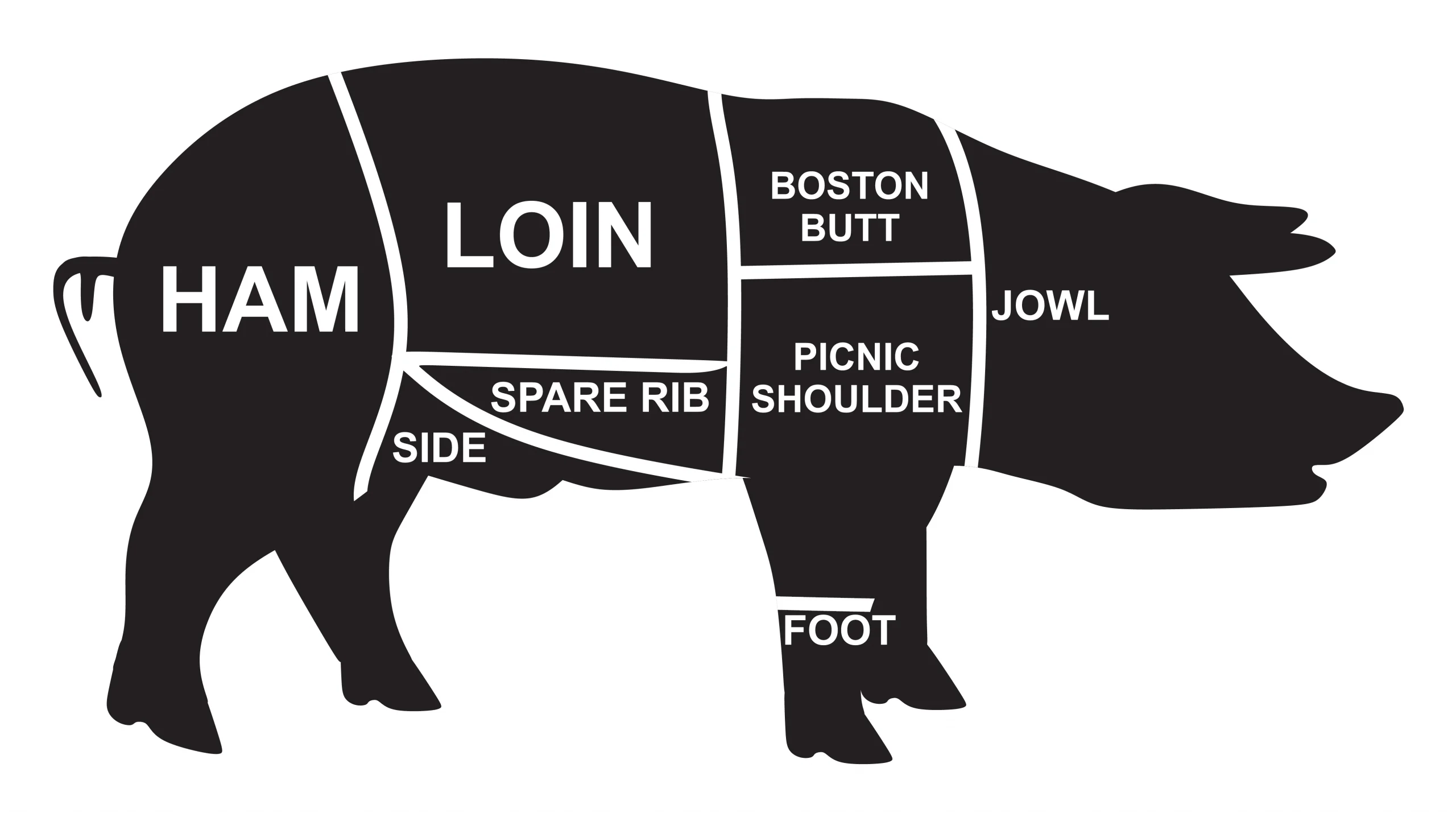
To say that I have had my hands on a lot of pork this year would be an understatement. I’ve worked with many a cut on many a preparation, skinning a nine-pound Boston butt for tacos al pastor for my housewarming party, hacking up belly and skin for cassoulet during a snowstorm, and keeping neck bones on a rolling boil for 12 hours to make tonkatsu ramen broth. At some point during those individual preparations, I uncovered a desire to learn more about the sum of these parts – thus, my search for a butchery class was born.

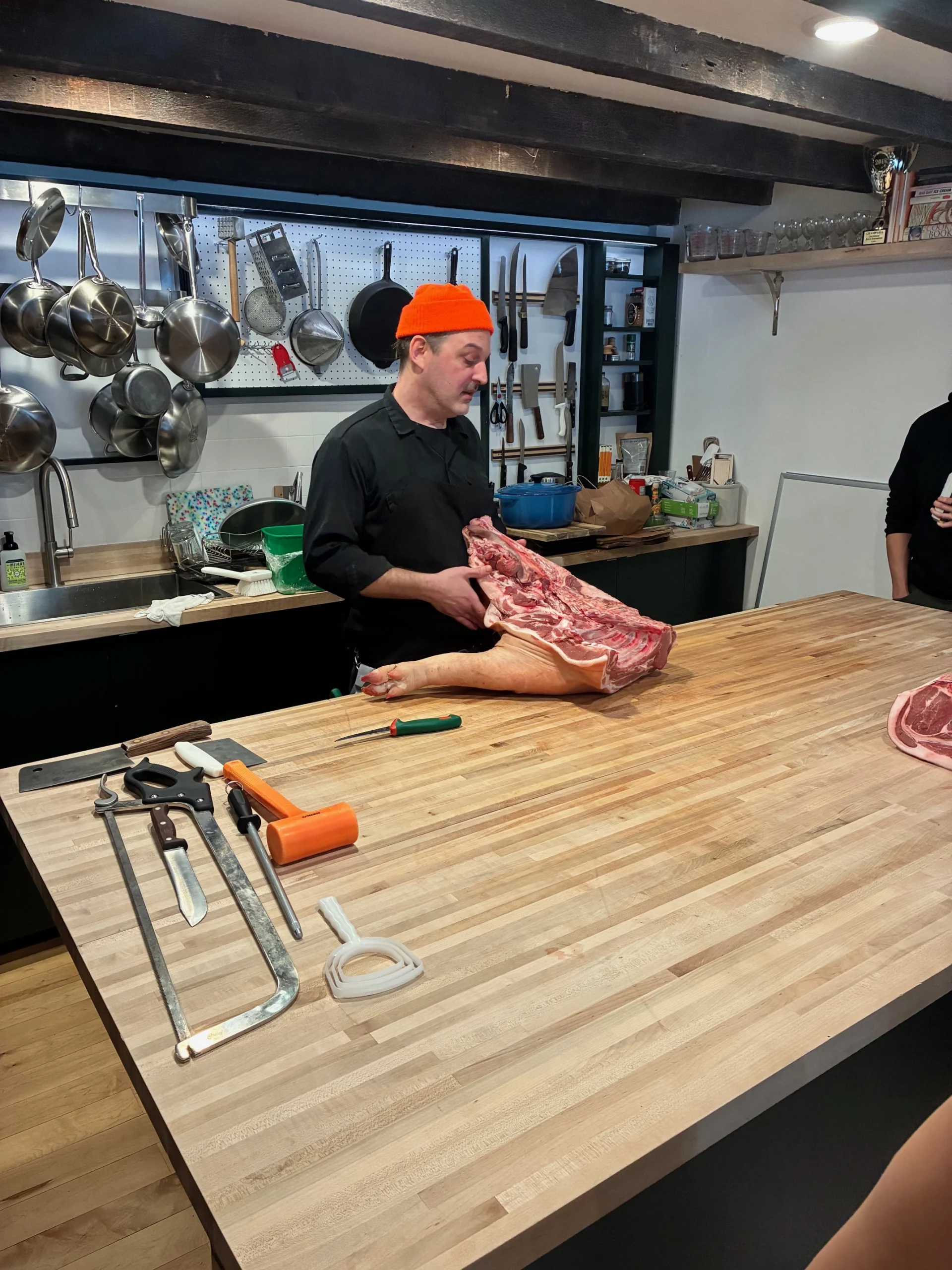
Taking a class at The Meat Hook – a renowned butcher shop in Brooklyn serving the borough and beyond for over 15 years – was an easy choice that provided exactly what I was looking for. One of the butchers, Nathan, gave us a brief history of pigs in America (Columbus brought them in 1493!), told us about The Meat Hook’s sourcing and processes, and broke down a pig step by step.

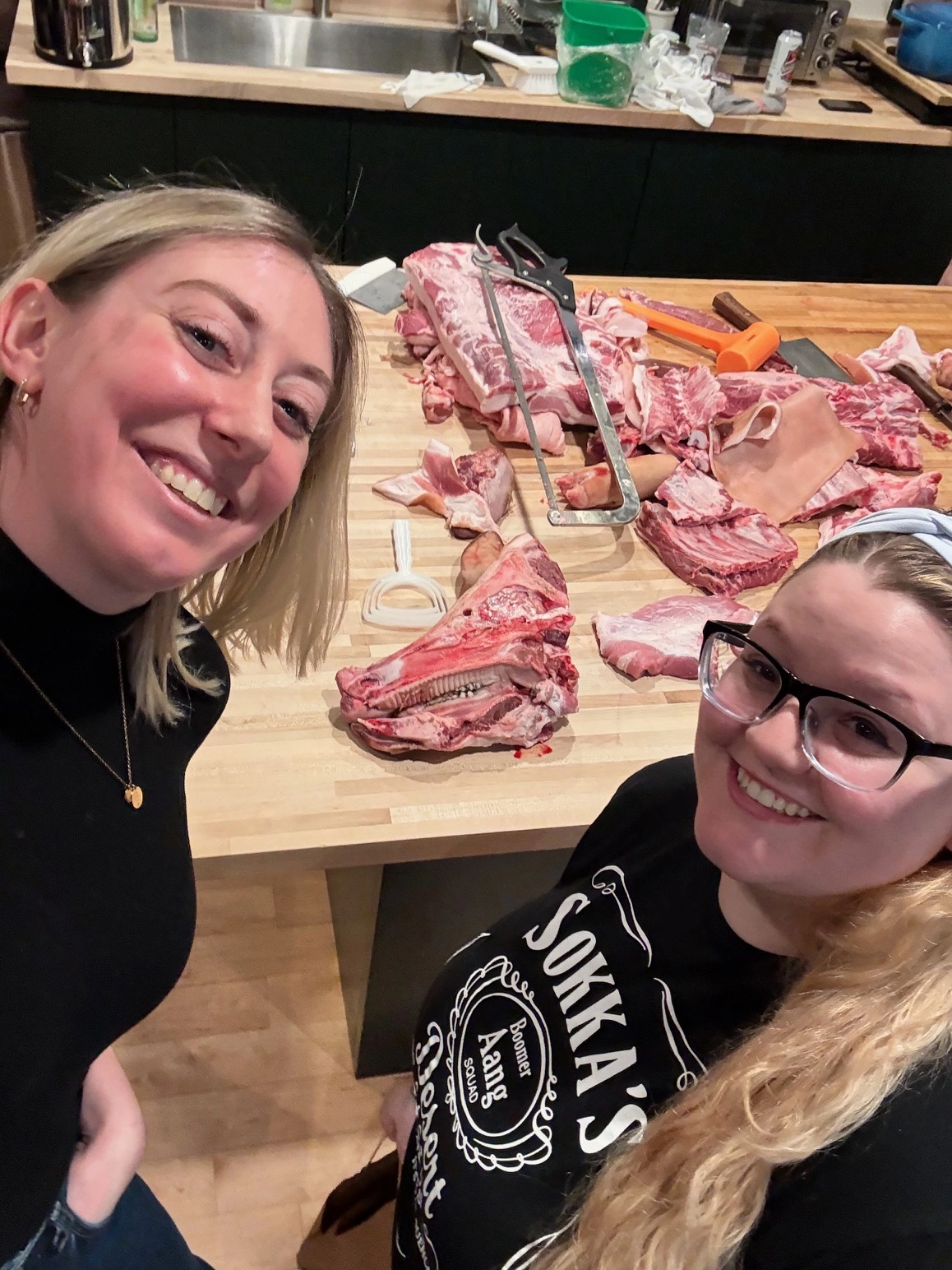
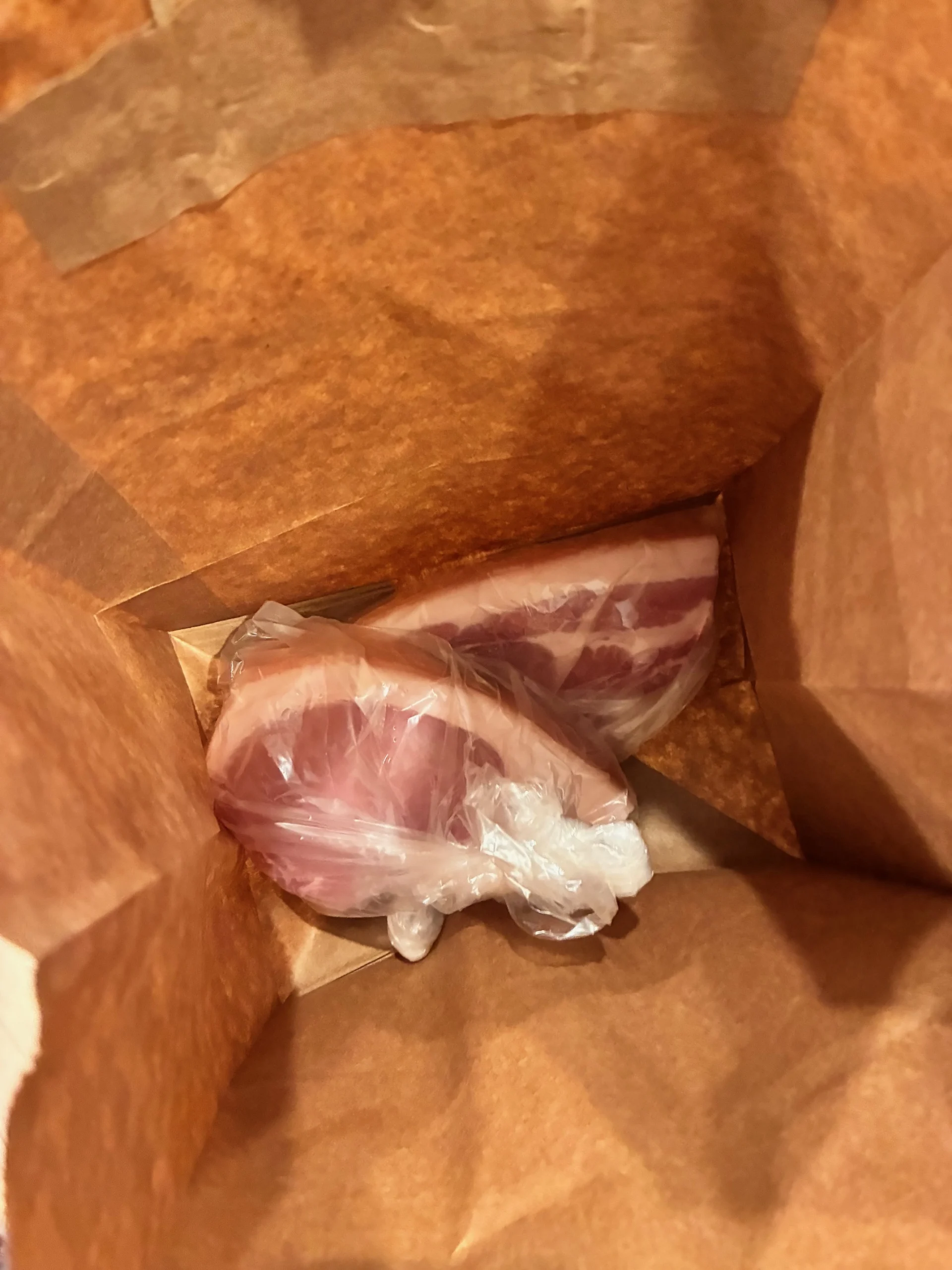
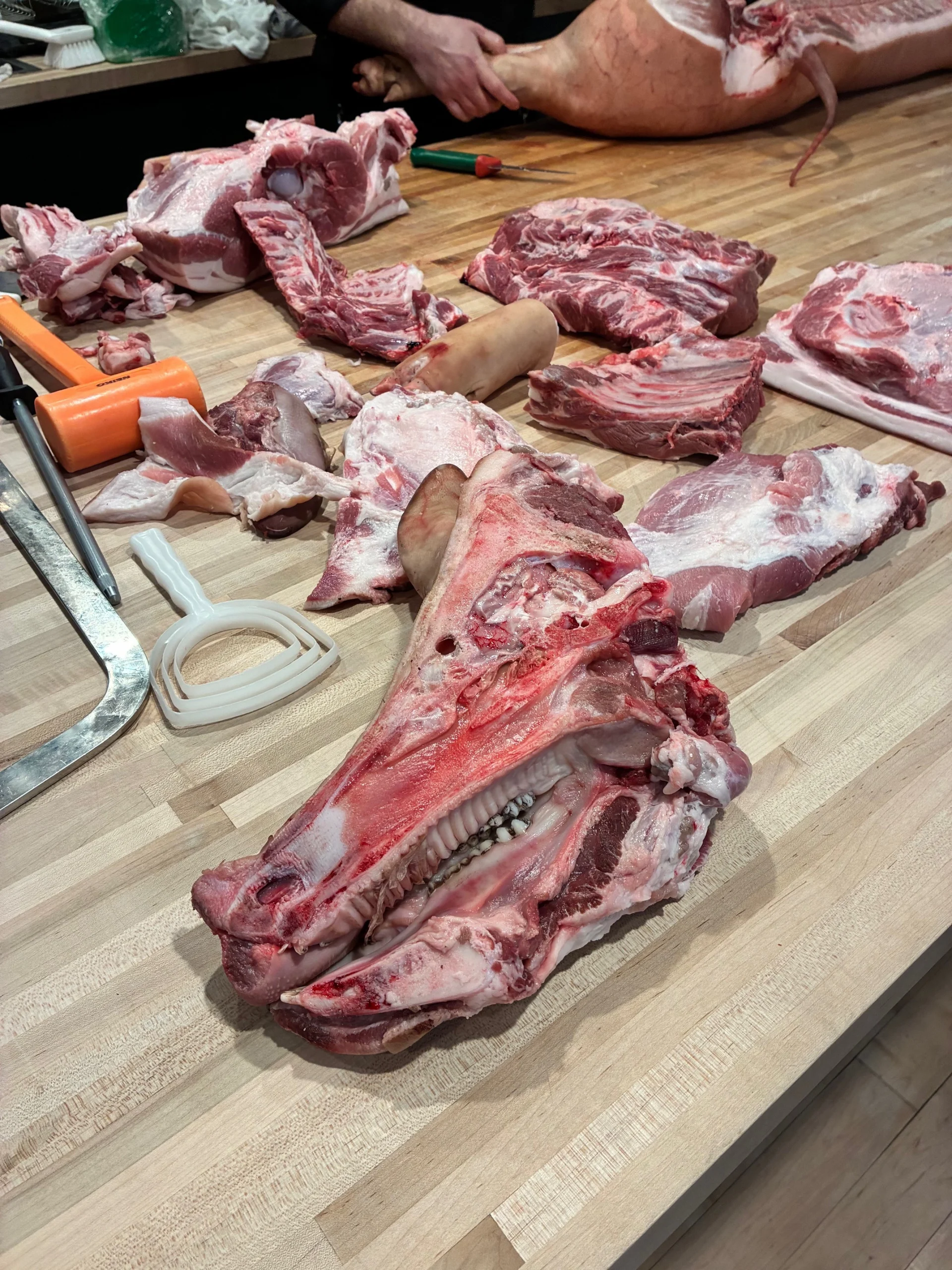
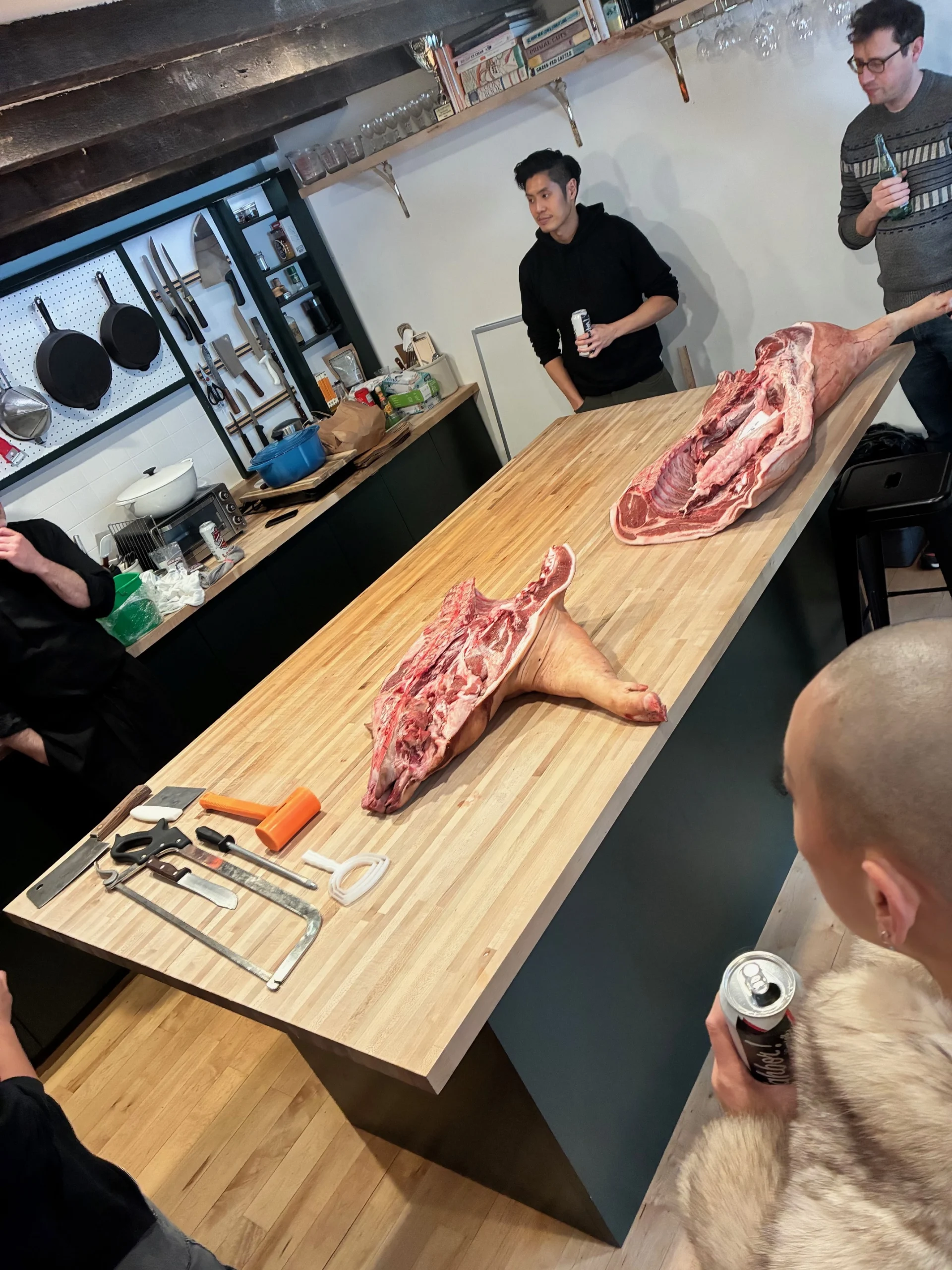
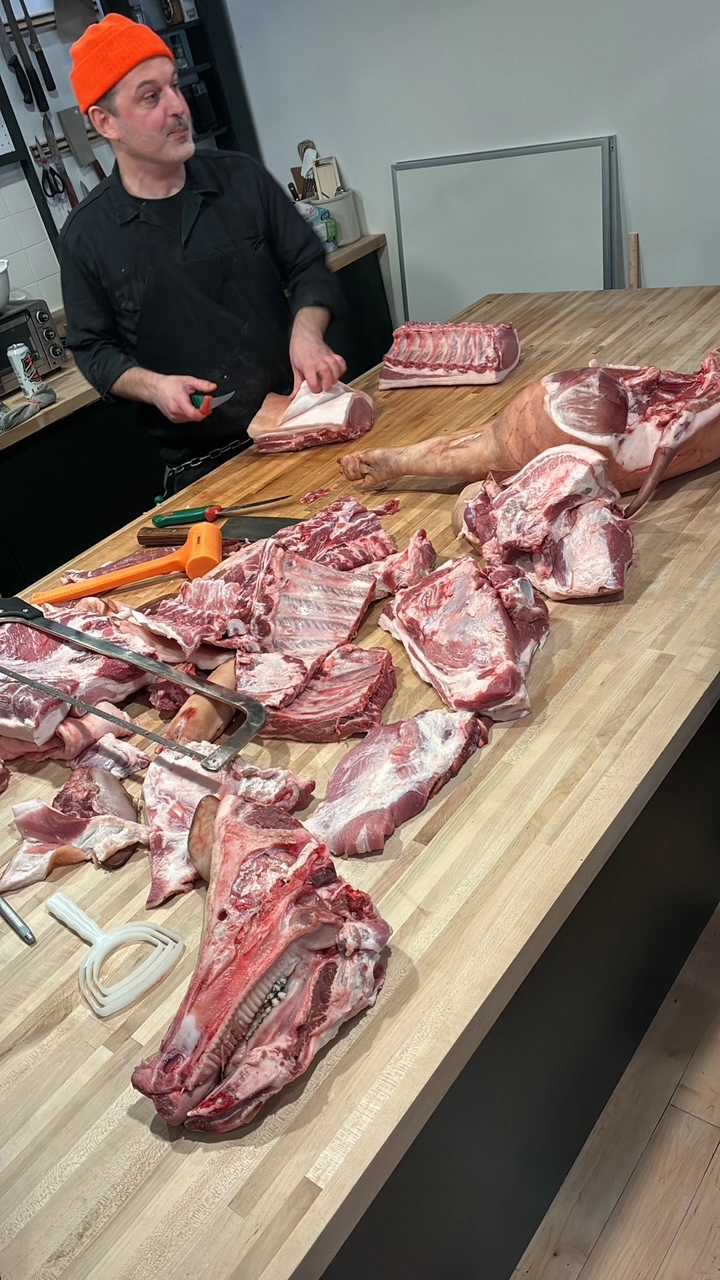
Watching the disassembly of a whole pig was fascinating. Pigs come to the butcher quartered (down and across the middle), having been checked for infestations in the eye (which is cut out) and liver (cut and sew back shut). Nathan used different knives, saws, and hammers to separate the various parts, talking us through his motions and popular preparations for each cut. When finished, he spread everything out on the table for us to see and sent everyone home with chops or loins.

Getting to learn something new to me, ask questions, chat with a treasured colleague, and eat delicious charcuterie was a perfect way to spend a Sunday afternoon. Learning is a fundamental key to success in any role, in any industry, and I’m grateful for the opportunity to do so. Our field is rapidly evolving, but the basics never go out of style!

Kyra's POV

I walked in expecting a straightforward lesson in knife skills—where to cut, how to follow the bone, which pieces make the best meals. Instead, I found myself captivated by the story of pigs in New York City. In the early 1800s, many households kept pigs to forage through the city’s trash heaps, an informal sanitation system that supported working families. As public health concerns grew and diseases like yellow fever and cholera spread, tensions rose between those who relied on livestock and wealthier residents who wanted them gone. That clash eventually led to what newspapers dramatically called the “Pig Wars”—not a literal war, but a turning point that reshaped the city’s streets and food systems.

Standing in a Brooklyn butcher shop, listening to that history while watching a whole animal thoughtfully broken down, made the afternoon feel bigger than a class. It was about craft, certainly—but also about immigration, urban growth, and how food shapes a city’s identity. We left with a deeper respect for the process, a stronger connection to our work, and pork chops to take home for dinner.

I walked in expecting a straightforward lesson in knife skills—where to cut, how to follow the bone, which pieces make the best meals. Instead, I found myself captivated by the story of pigs in New York City. In the early 1800s, many households kept pigs to forage through the city’s trash heaps, an informal sanitation system that supported working families. As public health concerns grew and diseases like yellow fever and cholera spread, tensions rose between those who relied on livestock and wealthier residents who wanted them gone. That clash eventually led to what newspapers dramatically called the “Pig Wars”—not a literal war, but a turning point that reshaped the city’s streets and food systems.

Standing in a Brooklyn butcher shop, listening to that history while watching a whole animal thoughtfully broken down, made the afternoon feel bigger than a class. It was about craft, certainly—but also about immigration, urban growth, and how food shapes a city’s identity. We left with a deeper respect for the process, a stronger connection to our work, and pork chops to take home for dinner.