The situation
The organization’s workplace hospitality program, which covers a staff café, pantries on every floor and catering for meetings and events, had been run by another provider for years, and the organization was ready for a change. It wanted food that was fresher, healthier, more consistent and genuinely delicious, and a program that reflected its mission and its commitment to sustainability.
The café serves about 130 people a day, from staff to visitors. Coffee is free, and the pantries carry snacks and drinks between meals. For many employees, the café is the center of the workday.
From the first meeting, the organization was clear about how it would judge success. It wanted more people choosing the café. And it wanted its staff to feel part of the change, not handed one.
The constraint
Changing hospitality partners is a decision a small group makes on behalf of everyone else. The people who set the direction aren’t always the people in line at noon, and most of the staff who rely on the program every day didn’t choose the change. For them, a new partner means new faces, new food, a new way to pay and new routines, all at once.
The direction itself was clear: healthier food. It’s a goal we hear often, and one we share. But in our experience, when people say they want to eat healthier at work, they rarely mean giving up the foods they love. They mean more good options alongside the familiar ones. The right balance only shows itself once the café is open and people are eating there every day.
There was also a measurement gap. The old register counted transactions, not people. Someone going back for a second time looked the same as a first-time visitor, so the organization couldn’t see the number it cared about most.
The café serves about 130 people a day, from staff to visitors. Coffee is free, and the pantries carry snacks and drinks between meals. For many employees, the café is the center of the workday.
From the first meeting, the organization was clear about how it would judge success. It wanted more people choosing the café. And it wanted its staff to feel part of the change, not handed one.
What GPHG did
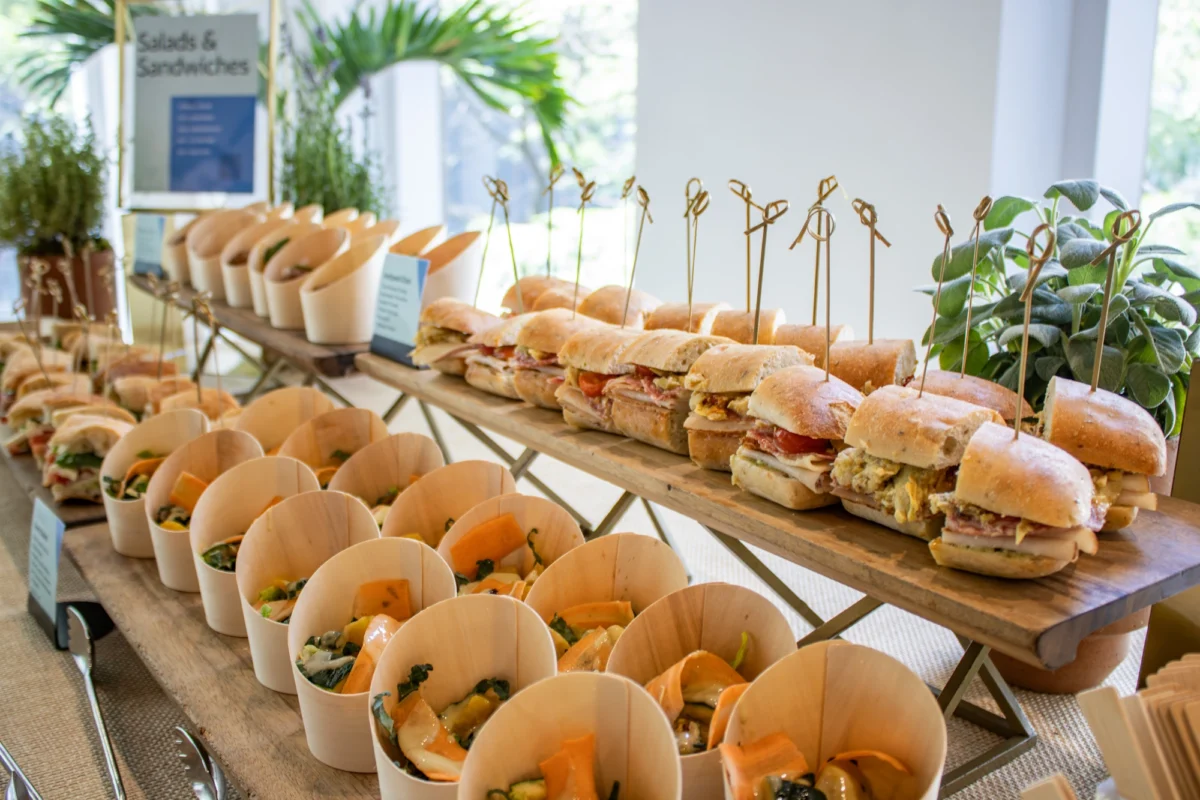
Every team at Great Performances had a hand in the transition: operations, culinary, HR, technology, finance, events, design, and marketing. They worked from one shared plan with the organization’s own team, meeting weekly.
We built the operation from the ground up. No staff carried over from the previous operator, so we hired a full team, from the general manager to the kitchen. We replaced the point-of-sale system with one that tracks individual guests, not just transactions, brought in new partners for coffee and food waste, and took over pantry service and catering alongside the café.
We kept lunch running through the turnover. Planning took a few months, but the café itself had to change hands in a single week. Rather than close it, we curated a pop-up lunch program for that week while we converted the space.
We read the history before planning. A year of sales data showed that summer runs light and beginning in September, the café runs busy. Building from a single month’s numbers alone would have set the wrong baseline.
We introduced ourselves before asking anyone to pay. Signage was in place before opening day, so the café told its story from the first visit. An open house gave the wider staff a chance to meet our team, hear how the program would work, and taste samples from every station, in several rounds so everyone could join us. Once the full café opened, the staff ate as our guests for about a week. They got used to the new menu, service, and payment system while we worked out the kinks.
We made feedback easy and constant. QR codes in the café and every pantry link to a short feedback form, so every guest has a voice, not just the people who planned the change.
We built a menu that could adjust. A rotating eight-week menu keeps the café interesting for people who eat there every day. It is easier on the kitchen teams, both on site and at our Bronx commissary, and predictable ordering cuts waste. Each cycle is rewritten for the season, with vegetables from Katchkie Farm, our organic farm in the Hudson Valley. Because the menu turns over regularly, changes can be worked in without disruption.
What changed

The transition landed. Participation is up an estimated 15 to 20 percent since the switch, and guests praised the food, the space, the clear labeling, and the kindness of the team. What they asked for was a little more of the familiar: more protein, a bagel in the morning, a stronger cup of coffee.
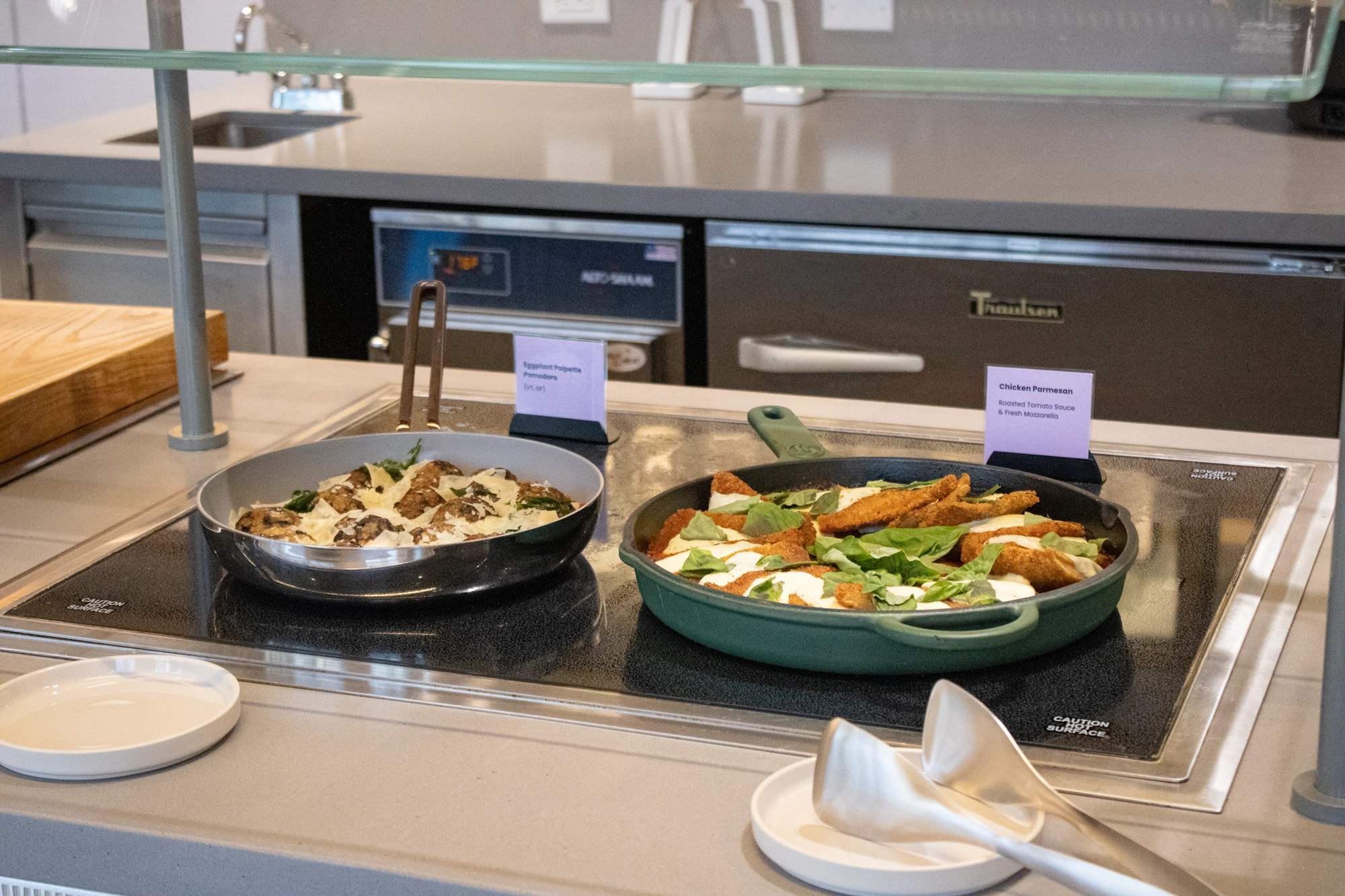
We got it mostly right from the start, so the changes were nuanced, not a reset. The coffee got stronger within days. By the fall menu cycle, the lineup had added made-to-order breakfast sandwiches and bagels, a Monday omelet station, a classic BLT and a second daily soup. The healthier core stayed: tofu, falafel and farm vegetables are still on the line every day.
By late summer, one guest thanked the team for “being such great listeners.” The program is running well, and the feedback loop is still open.
The takeaway

Changing hospitality partners is a change for everyone, not just the people who selected it. The organization sets the direction, the people eating every day refine it, and our job is to bring both voices to the table, along with what we’ve learned from other workplaces. Getting the balance right is iterative. There is always room to improve, and that is why we keep listening.
The direction itself was clear: healthier food. It’s a goal we hear often, and one we share. But in our experience, when people say they want to eat healthier at work, they rarely mean giving up the foods they love. They mean more good options alongside the familiar ones. The right balance only shows itself once the café is open and people are eating there every day.
There was also a measurement gap. The old register counted transactions, not people. Someone going back for a second time looked the same as a first-time visitor, so the organization couldn’t see the number it cared about most.
The café serves about 130 people a day, from staff to visitors. Coffee is free, and the pantries carry snacks and drinks between meals. For many employees, the café is the center of the workday.
From the first meeting, the organization was clear about how it would judge success. It wanted more people choosing the café. And it wanted its staff to feel part of the change, not handed one.