Every year, Earth Day gives us a moment to pause and think more intentionally about the choices we make. It can feel like a big, global conversation, but more often than not, change begins in smaller, quieter ways. In our kitchens, on our menus, and on the plates we serve every day.
At Great Performances, sustainability is not only about bold, visible gestures. It shows up in the daily decisions. How we source ingredients, how we cook, and how we look at food with a bit more curiosity and care. Some of the most meaningful shifts are not immediately visible to the guest, but they carry a lasting impact behind the scenes.
That is part of what makes the story behind Spare Burger feel so relevant right now.
The company behind Spare Burger was built on a simple but important idea. Much of what we consider waste in our food system still has real value. That perspective is rooted in the backgrounds of co-founders Adam Kaye and Jeremy Kaye, whose approach to food has been shaped by a deep respect for ingredients, a curiosity about how we eat across cultures, and a long standing connection to culinary innovation. With experience that spans both high level restaurant kitchens and large scale food systems, their work is grounded in the belief that thoughtful sourcing and real world functionality can and should go hand in hand.
Rather than treating surplus ingredients as an afterthought, they are incorporated from the very beginning. This chef driven approach focuses not only on reducing waste, but on creating products that perform seamlessly in working kitchens while supporting better agricultural practices. The result is food that is both delicious and more responsible by design, built with the understanding that using what has already been grown more thoughtfully can have a meaningful impact on both people and the planet.
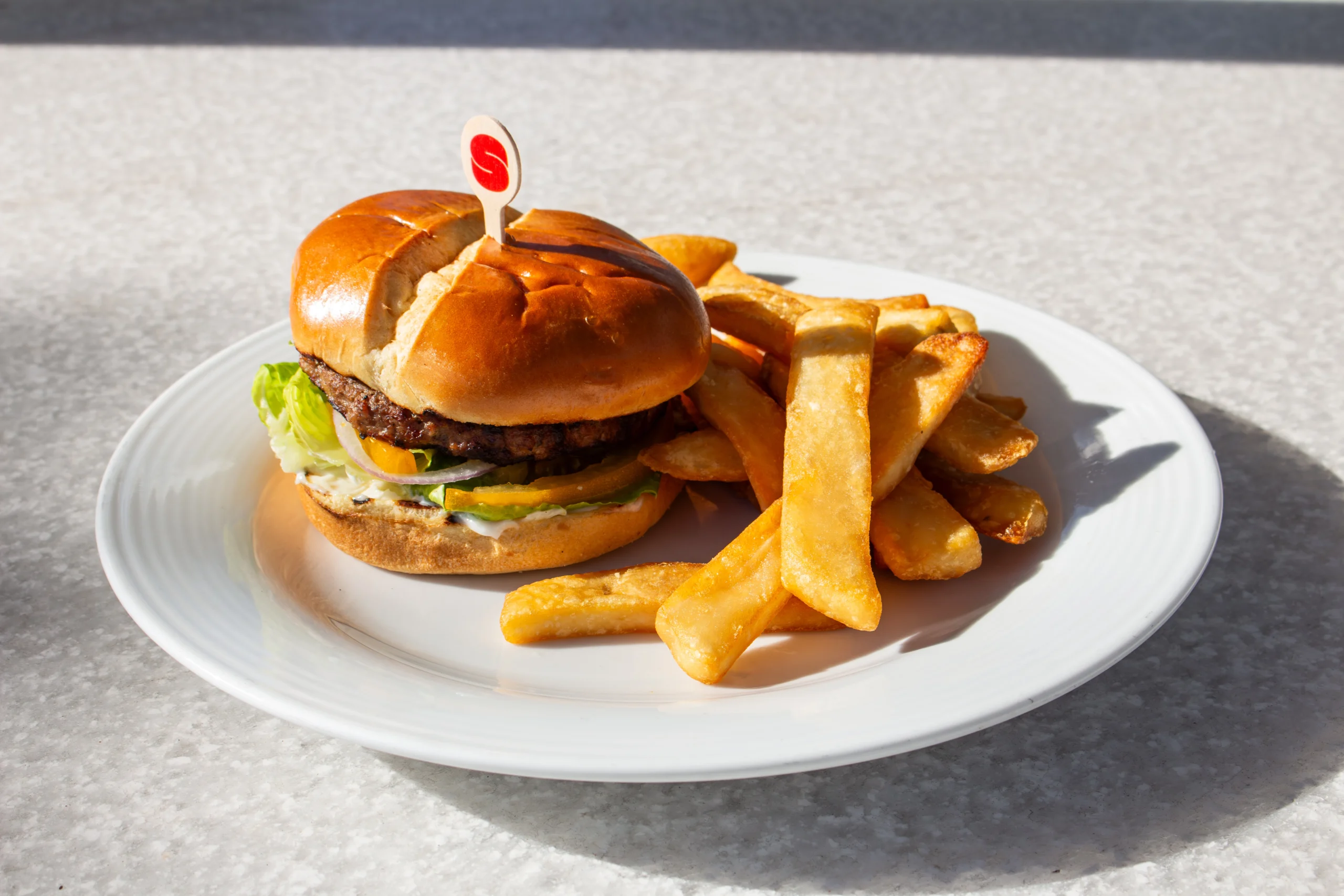
Spare Burger is a natural expression of that philosophy. By blending beef with surplus vegetables, it creates something familiar while quietly shifting the balance. It uses less beef, makes use of what has already been grown, and delivers a product that aligns flavor with impact. It is not meant to reinvent the burger, but to offer a more thoughtful version of something people already know and enjoy.
At Rockefeller University, that idea comes to life in a way that feels approachable and grounded in the guest experience. Spare Burger is served simply and confidently. Pre formed patties are grilled over an open flame, then placed on a soft potato bun and paired with a variety of toppings so guests can make it their own. Finished with a side of fries, it is a classic plate that feels both familiar and satisfying.
As our Corporate Chef de Cuisine, Omar Hegazi, shared, “Spare Burger is a fantastic product that focuses on sustainability and reconstituting produce that would otherwise go to waste. It tastes just like a traditional beef burger, juicier because of the added vegetables, and offers better overall nutrition.”
That balance between flavor, familiarity, and impact is what makes this approach so compelling. When you think about the scale at which we consume something as universal as a burger, even small shifts in how it is made can have a meaningful effect.
It is also a reminder that progress does not always require dramatic change. Sometimes it looks like using more of what we already have, reducing waste in thoughtful ways, and designing menus that are just a little more intentional than they were before. These are the kinds of decisions that, over time, support a more efficient and resilient food system without asking guests to fundamentally change how they eat.